Each proposal below sets out what we’d do, how it would work and how we’d measure whether it’s working.
Download the full documents, read them and tell us what you think.
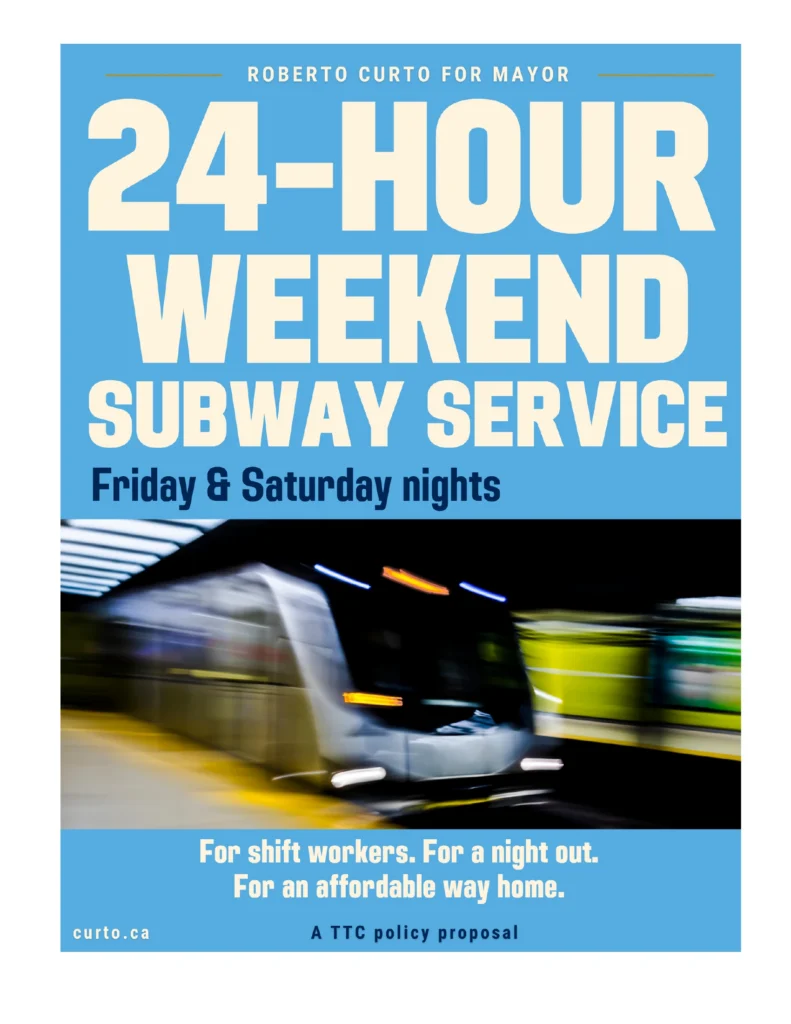
24-Hour Weekend Subway Service
For shift workers. For a night out. For an affordable way home.
The subway would keep running through Friday and Saturday nights, straight into morning service. The plan covers frequency, staffing, maintenance and night-bus connections. It’s built for healthcare workers, cleaners, security guards and everyone else whose shifts don’t follow subway hours. It also means a $3.30 fare home instead of a surge-priced ride.
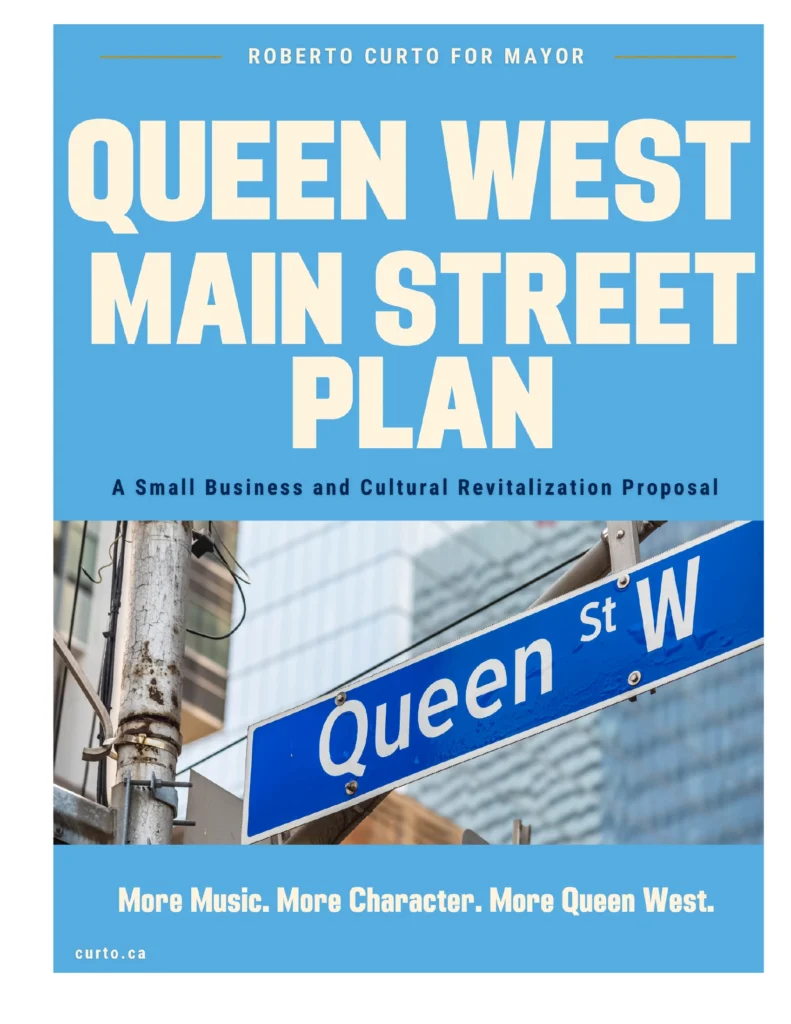
The plan starts with an accelerator that gives three winning entrepreneurs six months of rent-free space on Queen West and a path to stay. It adds neighbourhood Music Spots, support for independent venues, an annual Queen West Music Week and a program to fill empty storefronts. It also brings a better public realm with more seating, shade, lighting and pedestrian-priority summer evenings. What works on Queen can then go to main streets across the city.
More flavours. More opportunity. More life on our streets.
Toronto’s last attempt at diverse street food, the 2009 a la Cart pilot, curated it to death. This plan treats vending as a normal small business. It sets clear rules for safety, accessibility and sidewalk space, ends separate sidewalk location fees, publishes a simple map of where carts can go, and creates one plain-language application. City Hall sets the rules and entrepreneurs decide what to sell.
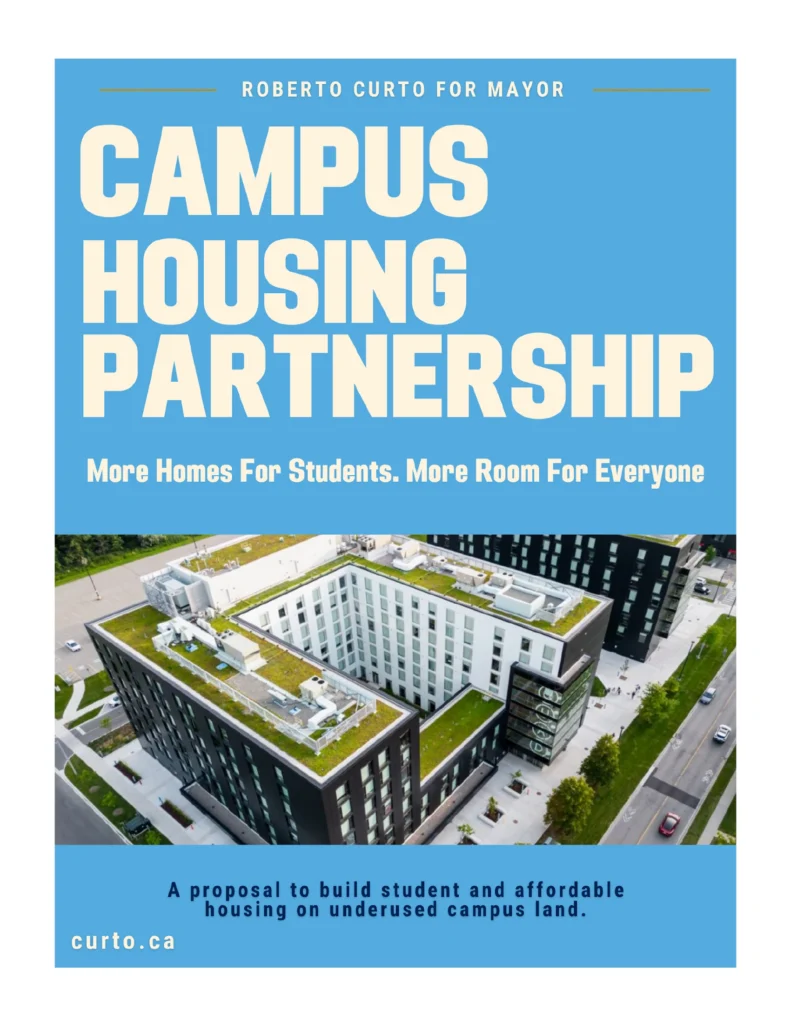
The goal is 20,000 new homes and student beds on and around Toronto’s campuses over ten years, starting with York’s Keele lands. The plan turns underused land, including surface parking, into mixed-use neighbourhoods near transit. Institutions that receive City support sign agreements on affordability and timelines, and an annual public report shows who is delivering. A public baseline ensures we only count housing that wasn’t already coming.